


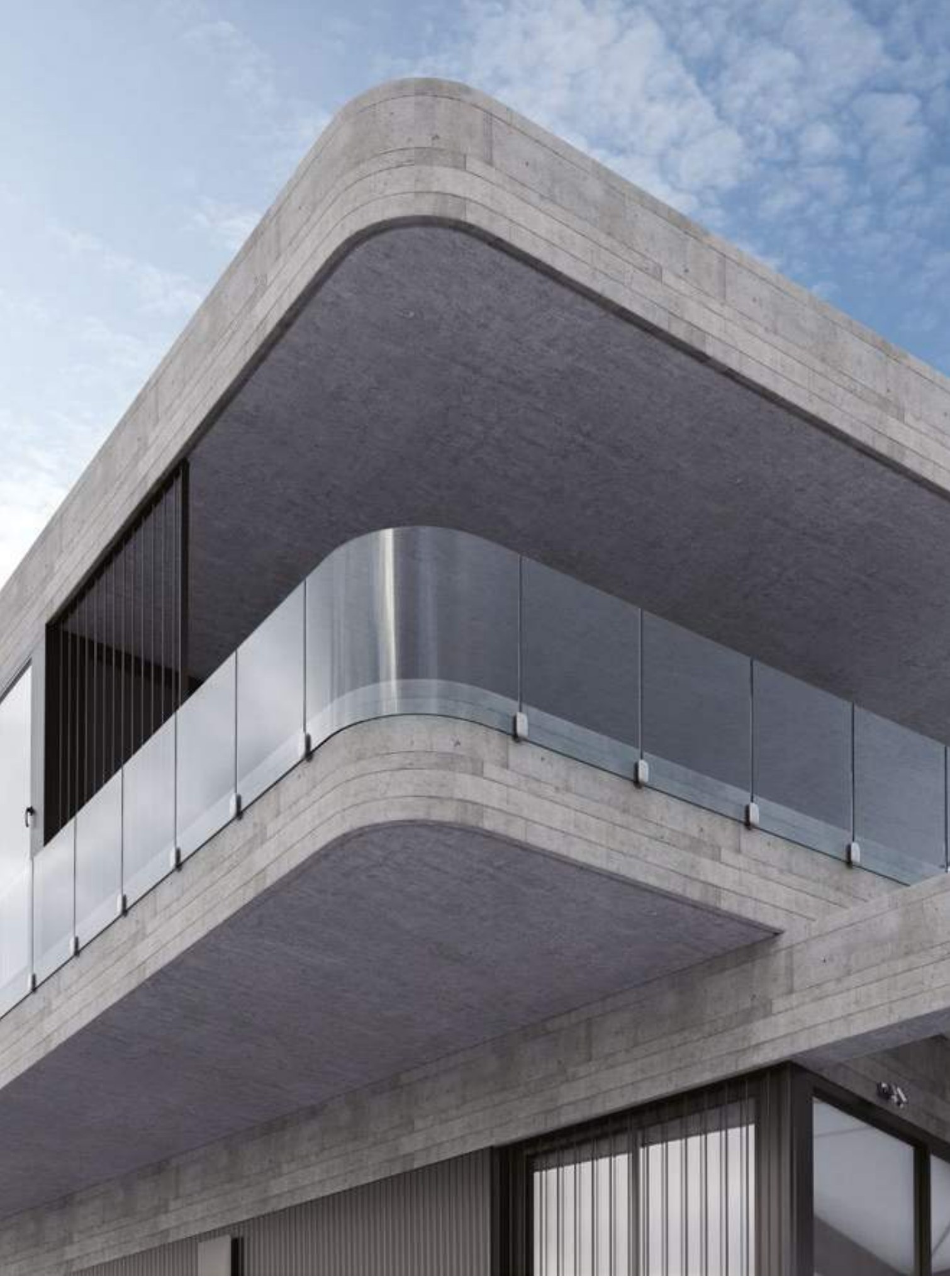
Glass Industry Trends 2026: What glasstec and GlassBuild Tell Designers About Frameless Glass
October was a big month for glass. GlassBuild America brought the North American industry together, and glasstec 2026 took over Düsseldorf from October 20 to 23. If you design, specify or build with glass, the two shows point in the same direction: cleaner lines, fewer frames, smarter performance and materials that can be reused.
Here are the glass industry trends for 2026 that we think matter most to architects, designers and property owners, and what they mean for frameless glass railings and glass office partitions.
glasstec 2026 by the numbers
According to Messe Düsseldorf’s closing report, glasstec 2026 drew more than 1,170 exhibitors from 48 countries and visitors from 126 nations. About 75% of visitors came from outside Germany, and about 75% were in top or middle management. The show was built around three Hot Topics: AI and digital technologies, decarbonisation, and the circular economy.
The organizers also noted that safety and climate resilience were key themes, citing ift Rosenheim’s Peichl. The next glasstec is scheduled for September 19–22, 2028.
Trend 1: Frameless, curved and oversized glass
The most eye-catching displays at glass technology live (gtl), the show’s research and innovation exhibition, were about form. Glass Magazine’s preview tour described:
- Eckersley O’Callaghan’s Full Circle pavilion, built from 54 identical curved laminated glass elements that slot together by hand, with no frames or screws.
- Sedak’s multi-axis bent tempered glass, produced without molds in sizes up to about 40 feet long and 12 feet wide.
- Luoyang North Glass’s MONOLITH, where eleven cast-glass panels nearly 15 feet tall support a glass roof holding a pool.
Professor Dr. Ulrich Knaack, who led the gtl preview, summed up how the industry has changed: “In the 90s, the innovations were pure structure. In the 2000s, we saw double glazed systems. Now, it’s a lot more diverse.”
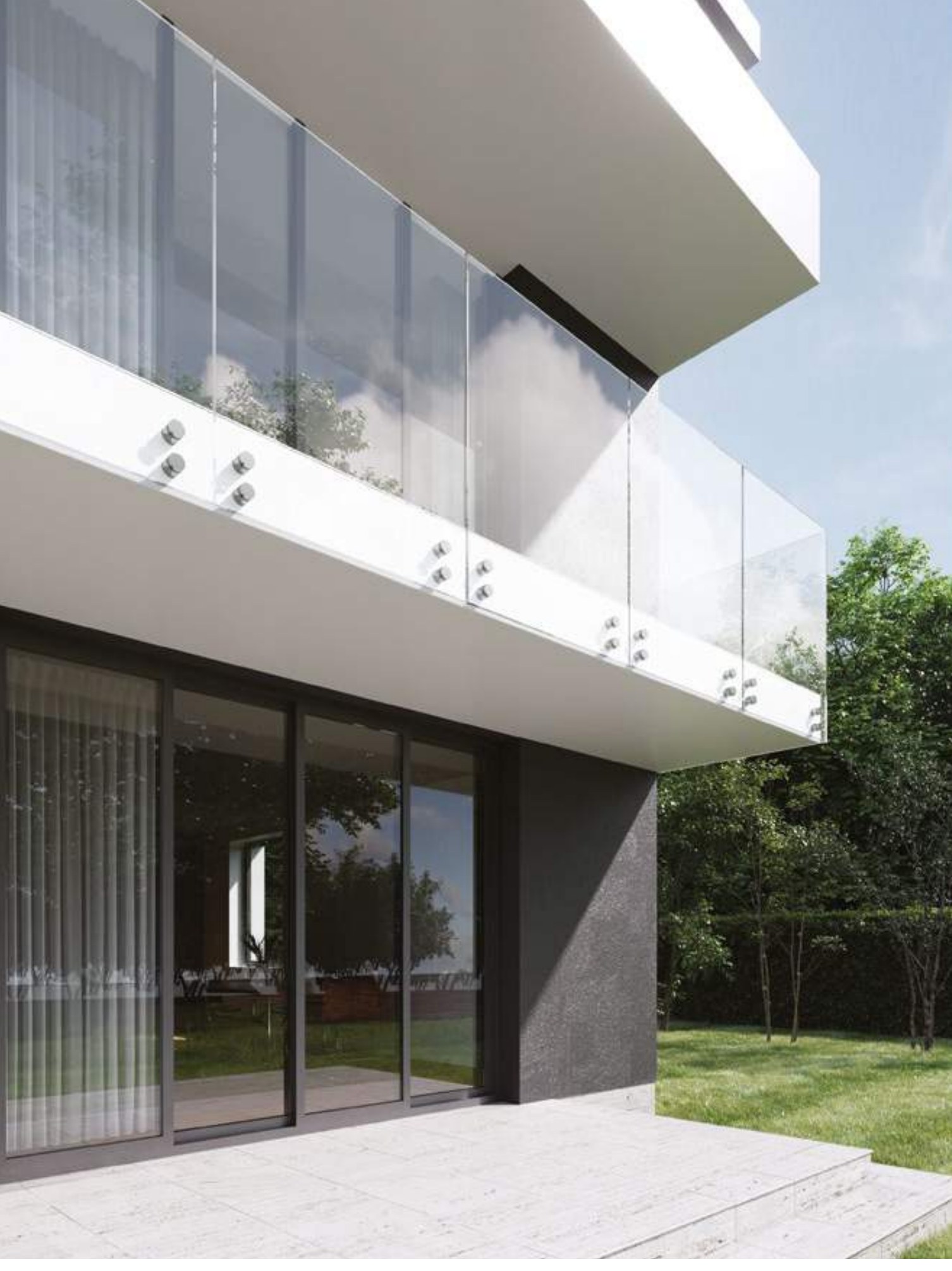
What it means for design: the push is toward glass that reads as pure surface, with the hardware in the background. That’s the same idea behind modern frameless glass railings. Every core system in the BRISK frameless glass railings lineup (M1, M4, M6, M7, M8, M9, M12, M13 and M15) has a no-top-cap look, with side-mounted, top-mounted and concealed-track options.
Trend 2: Circular design moves from slogan to product
The circular economy was one of glasstec’s three Hot Topics, and the exhibits showed it in physical form. Full Circle is designed to be reconfigured or rebuilt. A foldable glass wall from TU Darmstadt’s Glass Competence Center and Frankfurt University of Applied Sciences uses glass recovered from insulating units and laminated safety glass. And Réflexions, the gtl centerpiece by Atelier Emmanuel Barrois, is a lattice of about 1,400 glass prisms, roughly 10% of them made from industrial offcuts.
What it means for interiors: the same thinking applies to office fit-outs. Glass Magazine’s recent piece “Glass Partitions are Here to Stay” points out that demountable partitions can be reconfigured with less waste than fixed construction. It also notes that qualifying systems may be eligible for accelerated depreciation, depending on the project. Talk to your tax advisor about your own case.
Trend 3: Thinner, higher-performance insulating glass
USGlass magazine reported a competitive push to improve vacuum insulated glass (VIG) at glasstec. Vitro showed VacuMax, which hides the vacuum port, and LandVac, AGC (FINEO), Saint-Gobain (INSIO) and Fujian Super Tech were also exhibiting. One exhibitor told USGlass that VIG can be as thin as 6.5 mm, compared with more than 40 mm for triple glazing, and that renovation is the main market. Price, size limits and uncertainty about standards are still holding VIG back.
What it means for design: slimmer glass units mean slimmer profiles and cleaner sightlines, which is the direction minimal architecture has been heading for years.
Trend 4: Smart glass, digital factories and the labor gap
Smart glass is back in the news. USGlass reported that Gauzy secured $7 million to restart smart glass production, and covered the industry’s work on OPC UA, a standard for helping fabrication machines from different makers work together. At GlassBuild America, Glass Magazine’s Norah Dick wrote that the skilled labor shortage is driving more automation and robotics on the shop floor.
For designers and owners, the takeaway is that fabrication is becoming more automated and more connected.
Trend 5: Glass office partitions keep growing
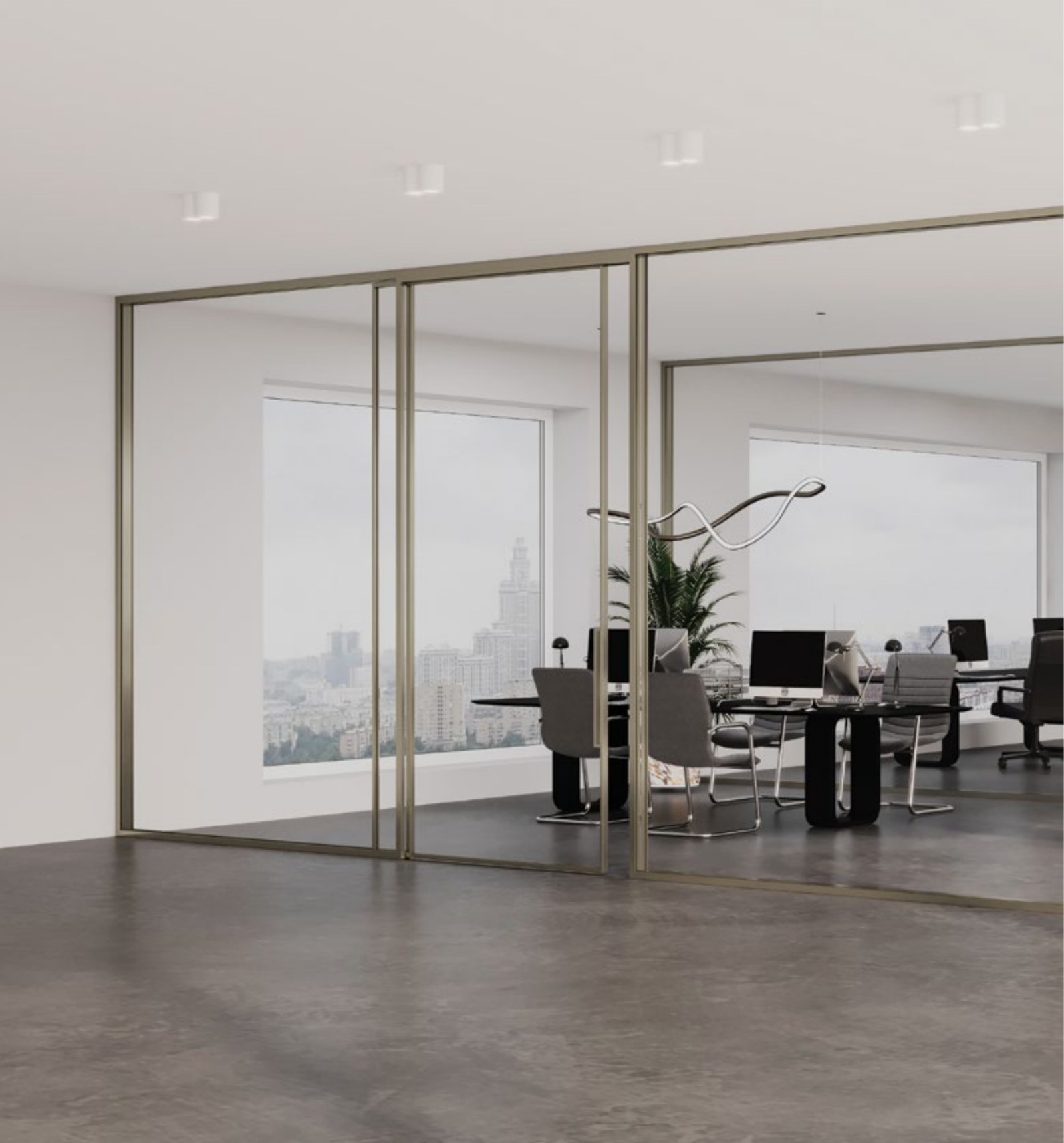
Writing in Glass Magazine, CRL’s Mark Suehiro cited a $1.8 billion and growing Division 10 market for glass partitions. He pointed to daylighting and wellness, and to dual-glazed systems that reach high STC ratings for acoustic privacy.
That matches what we see in modern offices: clients want the openness of glass without the noise of an open plan. BRISK’s glass partition systems are demountable, available single or double glazed, and range from STC 37 to 48:
| System | Sound rating |
|---|---|
| Arcos | STC 37 (certified) |
| Aries | STC 40 |
| Cassia | STC 44 |
| Modles | STC 46 |
| Allure | STC 48, bullet-proof glass |
| Linea | Sliding system, no STC rating |
Safety and climate resilience stay front and center
The glasstec organizers highlighted safety and climate resilience, and that should shape any glass project. For railings, that means choosing a system engineered for the application. BRISK’s M1 system meets pool barrier code, all BRISK railing systems work on stairs, and LED lighting is available on every system for a clean, lit edge at night.

Bringing 2026’s glass trends to your project
The message from glasstec and GlassBuild is clear: glass is becoming lighter-looking, more reusable and smarter, and design is leading the way. Whether you’re planning a frameless balcony, a pool deck or a quiet glass-walled office, see more finished work in our premium showcase.
BRISK serves customers nationwide from offices in Brooklyn, NY, Elizabeth, NJ and Sarasota, FL. Measuring is included with installation, and supply-only orders are available if you prefer to measure yourself. Contact BRISK to talk through your next project.
Sources
- Messe Düsseldorf – “glasstec 2026: world-leading trade fair highlights strength of the international glass industry” (press release, Oct. 2026): https://www.glasstec-online.com/en/Media_News/Press/Press_material/Press_releases/glasstec_2026_world-leading_trade_fair_highlights_strength_of_the_international_glass_industry
- Glass Magazine – “Before the Doors Open: A Sneak Peek at glasstec’s 2026 glass technology live” (Oct. 19, 2026): https://www.glassmagazine.com/news/2026/doors-open-sneak-peek-glasstecs-2026-glass-technology-live
- USGlass – “glasstec 2026: Behind the Competitive Push to Improve VIG” (Oct. 20, 2026): https://www.usglassmag.com/glasstec-2026-behind-the-competitive-push-to-improve-vig/
- USGlass – News (Gauzy smart glass funding, OPC UA machine interoperability, glasstec coverage, Oct. 20–23, 2026): https://www.usglassmag.com/category/news/
- Glass Magazine – Norah Dick, “GlassBuild: Creating a Legacy” (Oct. 15, 2026): https://www.glassmagazine.com/blog/2026/glassbuild-creating-legacy
- Glass Magazine – Mark Suehiro, “Glass Partitions are Here to Stay” (Sept. 2, 2026): https://www.glassmagazine.com/article/glass-partitions-are-here-stay
Image credits
- Images 1–3: BRISK Architectural catalogs. Image 1: M7 Lateral Point Fixing Series (BRISK Railings 2024, p. 44). Image 2: M6 Lateral Point Fixing Series (BRISK Railings 2024, p. 40). Image 3: Allure (Client Presentation Catalog, p. 39).
- Image 4: Photo by 高 长华 (Gao Changhua) on Pexels, https://www.pexels.com/photo/minimalist-modern-architectural-building-facade-39491868/. Free to use under the Pexels License (https://www.pexels.com/license/). Credit line: “Photo: 高 长华 / Pexels”.
